Writing

Project
2025

Ejected Bodies

NAMARA Projects

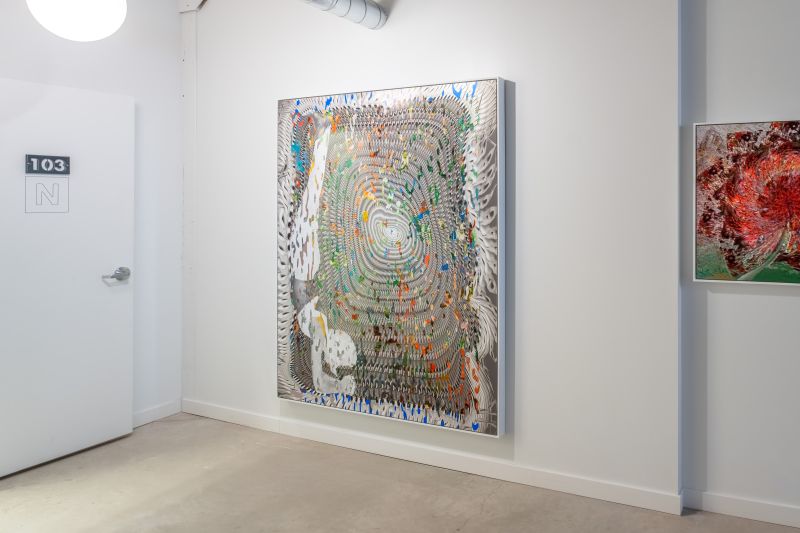
A curated exhibition at the NAMARA Projects space that was released on 2025 08 28. Between 2022 and 2025, NAMARA's project space at 103–915 Dupont Street hosted a cycle of exhibitions, performances, a…

A curated exhibition at the NAMARA Projects space that was released on 2025 08 28.

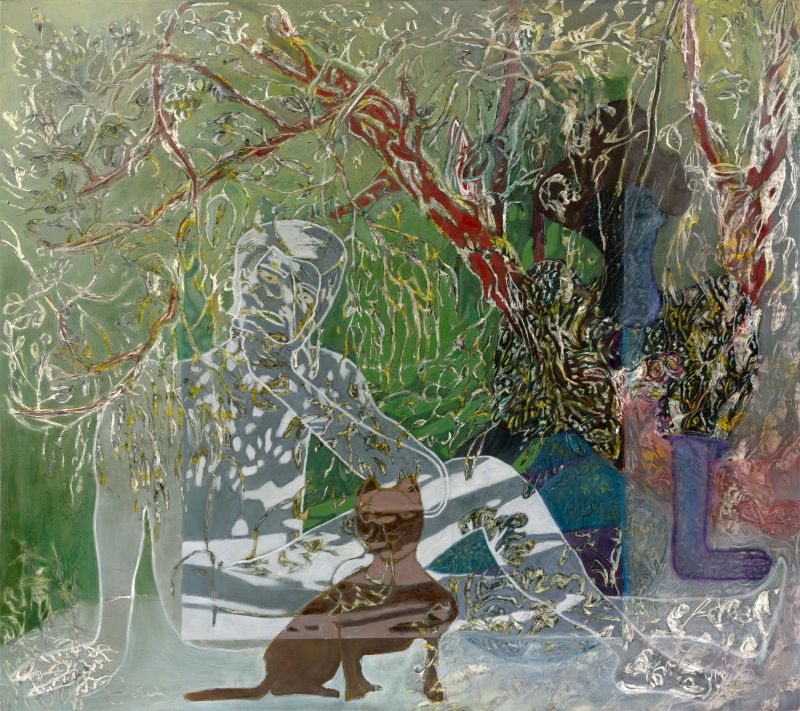
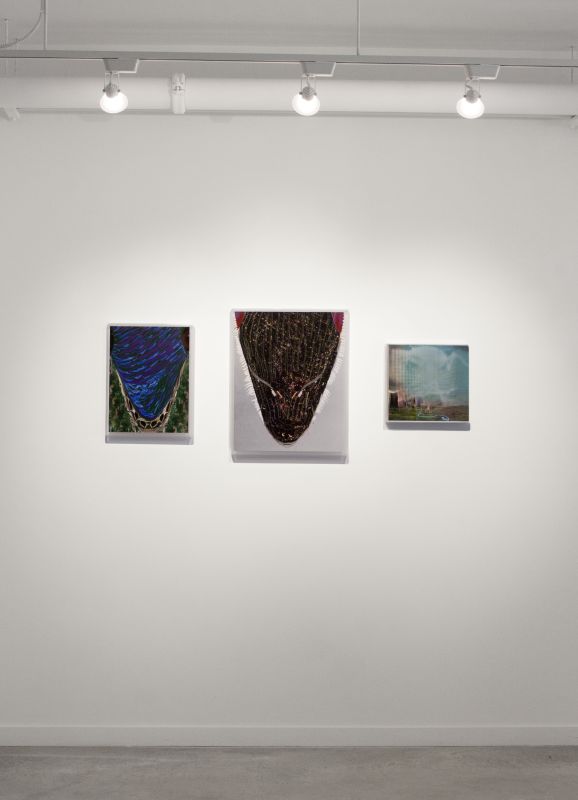
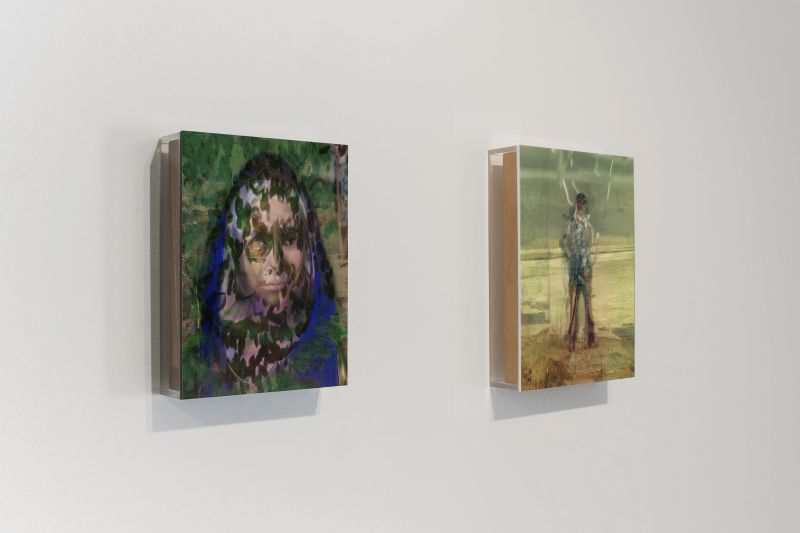
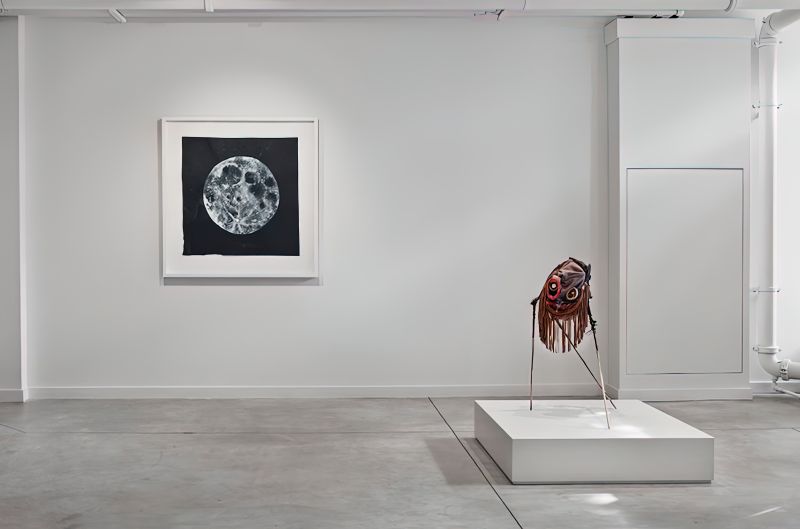
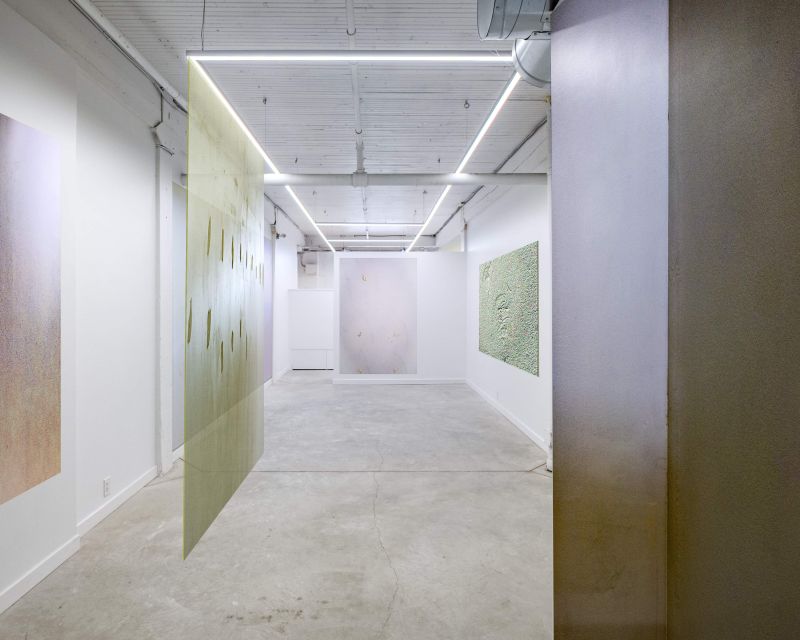
Between 2022 and 2025, NAMARA's project space at 103–915 Dupont Street hosted a cycle of exhibitions, performances, and residencies. Over time, as in any working gallery, its walls accumulated subtle traces: patched holes, rubbed paint, faint dust shadows. Normally erased before each new opening, these became the final material of attention. After the space was vacated, its emptiness was photographed and then digitally staged to resemble a new exhibition. Nothing was installed. Ejected Bodies is an exhibition that exists only as its own record.

What is encountered here is not absence but a condensation of time. The walls hold at once the years of activity, the final moment of vacancy, and the translation into image circulation. Surfaces slip between registers: gradients read like color-field paintings, patched drywall echoes evidence photography, gold-toned planes resemble oxidized metal, faint yellows dissolve into light. A blemish becomes a brushstroke, a scuff becomes atmosphere. To view them is to recognize the familiar vocabularies of contemporary display—the large-format print, the wide-angle frame, the cool lighting of the white cube—yet to know that nothing was ever there.

The project belongs less to the discourse of 1970s dematerialization than to a contemporary economy of simulation. As Boris Groys has argued, the copy now precedes and replaces the original; circulation rather than presence has become decisive. The encounter resonates with Mark Fisher's account of hauntology, in which the present is permeated by what never fully arrives or disappears. Here the exhibition is already archived at the instant it appears, spectral by design.

There is also a politics at work. The gallery's rent doubled during its tenure, an index of how quickly cultural activity is converted into speculative value—even as the very sites that produce it are displaced. The hidden labor of upkeep—patching, painting, and cleaning—has been monumentalized as subject matter. What is usually erased becomes central: that we had presence is what gives certain space value, as evidence here transformed into aesthetic surface. Ejected Bodies carries this condition to its limit: the exhibition is not emptied but displaced into the network, into what Geert Lovink describes as the post-internet condition, where documentation is not secondary to an event but is itself the event.

The exhibition does not mourn what was lost; it studies what remains. What survives of a space when the work is gone is not just the trace—it is the story told about the trace, and how that story circulates. The photographs do not merely record the empty gallery; they reshape it into a stage where attention, memory, and format perform together. These aren't placeholders or proofs: they are what we now recognize as an exhibition—images that behave like events, files that act as anchors for experience. The shift is subtle but total. Rather than asking what happened in the room, Ejected Bodies asks what kind of presence is created when there is no room left. It invites the viewer to notice how contemporary art so often exists where documentation becomes indistinguishable from intent and where circulation defines the work more than installation ever could. In a culture shaped by compression, eviction, and acceleration, what counts is not what can be preserved in place but what can move, return, and persist across contexts. The space has ended, but the exhibition has not; it continues wherever its images are held, opened, read, and folded into the rhythm of now.

— images and text by Alex Fischer, August 2025

NAMARA Projects – Ejected Bodies exhibition page

2024

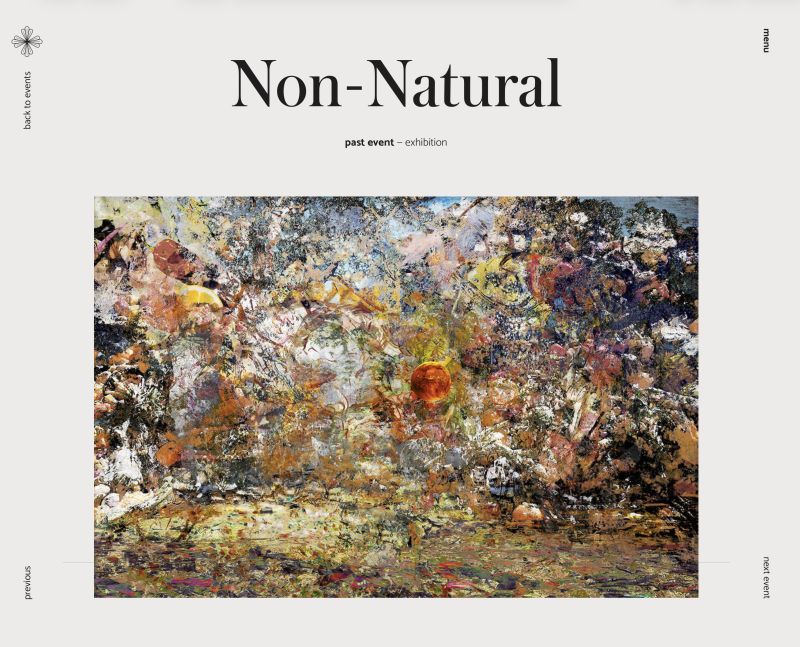
Non-Natural

Sage Culture

Jun 27th — Sep 14th, 2024 In an era dominated by digital connectivity and a growing disconnection from the natural environment, Sage Culture Gallery proudly presents "Non-Natural," an online exhibitio…

Jun 27th — Sep 14th, 2024

In an era dominated by digital connectivity and a growing disconnection from the natural environment, Sage Culture Gallery proudly presents "Non-Natural," an online exhibition that proposes a philosophical dialogue concerning the nuanced interplay between artistic media and human perceptions of the natural world.

View the Exhibition

2022

Art Show

NAMARA Projects

An exhibition that took place 2022.10.22 to 2023.01.06 curated from across several bodies of work and informed by the following tenets: [ⅰ] Practice here involves a persistent discovery and wielding o…

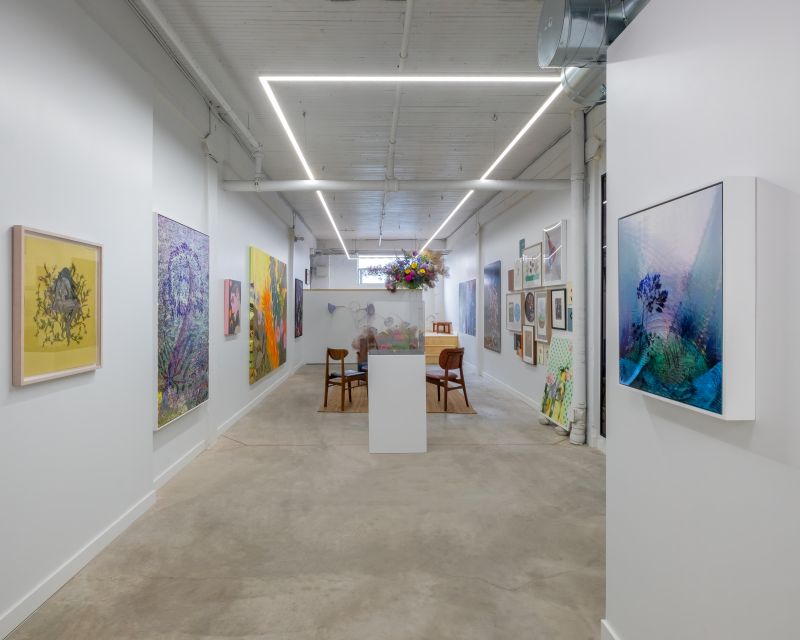
An exhibition that took place 2022.10.22 to 2023.01.06 curated from across several bodies of work and informed by the following tenets:

[ⅰ] Practice here involves a persistent discovery and wielding of new creative tools, strategies, and ideas.
[ⅱ] An aim to reveal the hybrid and fluid nature of things.
[ⅲ] This body is mine but I am not my body.
[ⅳ] Art is an unlikely extension of nature.
[ⅴ] Assistance as a partnership.
[ⅵ] Perspectivism reigns.

NAMARAprojects.ca exhibition page

Giving Entry

NAMARA Projects

Took place July 9 — September 10, 2022. Select works by Michael Dumontier + Neil Farber, Alex Fischer, [Nelson Henricks](http://nelsonhenric…

Took place July 9 — September 10, 2022.

Select works by Michael Dumontier + Neil Farber, Alex Fischer, Nelson Henricks, Rick Leong, Zachari Logan, Terran McNeely, John Monteith, Janet Morton, Dainesha Nugent-Palache, Nicotye Samayualie, Kristin Sjaarda, Winnie Truong, Emma Welch, and Xiaojing Yan.

Giving Entry is an exhibition of works by artists who employ flowers or floral motifs in considerations of social, philosophical, and political subjects. What matters most is the embeddedness of these blooms in their particular stories. Within this exhibition, flowers are put to work symbolically in varied artistic inquiries. Counting among them are built narratives around equality and difference; history, memory, and temporality; environment and climate; speculation and the supernatural.

2019

Boundless Exploration of Media and Space

MINUS37

Natalie Kotok. “Boundless Exploration of Media and Space.” MINUS37, 2019.

Alex Fischer: Boundless Exploration of Media and Space
By Natalie Kotok, April 12, 2019

Alex Fischer, a Canadian contemporary artist, uses his roots in the gorgeous vastness of Canada's landscapes to create uniquely stunning portals into nature, animal and human portraiture. Using a delicious combination of realism and contemporary conceptualism, Fischer channels an 'inner urgency' through various means: physical, digital, and sculptural. All of his works share a similar flavor of introspection and poignant, organic creativity, no matter the medium. A strong, natural vibe envelopes his creations, where moss, plants and animals entangle; from realism to abstraction.

Working ardently and unrestricted by style or niche, Fischer's fascinating process explores the boundaries of identity, beauty, and abstraction, "I'll use any means at my disposal to explore visual space." Read on to find out more about Fischer and his haunting, nature-laced visuals.

What is your preferred medium to work with?

Most of the labor is done in Photoshop. Sometimes the images I make are treated as sketches and turned into paintings but more often than not the digital images are produced and best seen as a print.

Tell us a little bit about your life. Was art always present?

I grew up in the early 90s on the Canadian countryside, surrounded by a landscape of forests, fields, and lakes. With my family also being generally creative, I recognized pretty early on how rewarding making things can feel. My earliest exposure to Art was probably in books. Historical masters might have inspired a romantic notion of what it meant to be an artist, but I found it suited both my ambition and neurotic habits.

What is your artistic background, when and how did you start? How did you end up with the style you currently work in?

I drew a lot as a kid and by the time I was a teenager I had honed making realistic portrait drawings and pastel landscapes. It was a great way to see dedication and practice pay off. I pretty quickly turned to work with my computer though. The open-ended nature of digital imaging has always been fascinating to me. It's a window into all other visual experiences. Pixel art was all that was possible at first, then basic photo manipulation, today there are generative algorithms that let us mashup and imagine scenes impossible just a few years ago. It's still called digital imaging but I recently started using the term assisted imaging in the sense that algorithmic processes are my studio assistants. Basically, today in my practice, I'll use any means at my disposal to explore visual space.

How do you usually work and where do you draw inspiration from?

I draw inspiration from the great uncertainty that is creativity. As many artists do, I create things as a way to channel an inner urgency. Sometimes I set out with something specific in mind like a technique, cause or intellectual story, but I'm often not satisfied with a piece unless there's something inexplicable to work through. Working with assisted imaging is prime for this since it allows for the results of different imaging strategies to be generated quickly. I'm always learning what changing a few parameters can do and I consider it my job to refine those strategies draw out the content in generated abstractions. I like to shed light on the human element of the story.

Can you tell us about some of your favorite tools to work with?

Any camera, Photoshop, Corel Painter, a Cintiq, wood, water-based oils, and Github.

What do you hope your work achieves or invokes?

Questions and some relaxation.

How do you feel about being a young artist in a modern society?

I feel less young every day that I don't stretch. These are strange times and I imagine they'll only get stranger. We're all learning new interfaces, AIs are set to displace swaths of the workforce, and planet earth is going through an extinction event. Couple those concerns with a personal ambition to ease suffering, contribute to discourse, and navigate effectively the rules of economic rentability. We all feel like we have our work cut out for us, don't we?

Intro written by Kate Smith

Bending Towards the Sun

YYZ Gallery

Curated by Veronika Ivanova, MARCH 30 - MAY 4, 2019, “Bending Towards the Sun” is a fundraising exhibition in support of YYZ. “Bending Towards the Sun” celebrates YYZ Artists’ Outlet—their growth and…

Curated by Veronika Ivanova, MARCH 30 - MAY 4, 2019, “Bending Towards the Sun” is a fundraising exhibition in support of YYZ. “Bending Towards the Sun” celebrates YYZ Artists’ Outlet—their growth and transformation over the past 40 years, and their resilience and ability to thrive in a climate increasingly hostile to cultural work.

YYZ 40th Anniversary Exhibition, Bending Towards the Sun features the work of Frances Adair, Grayson Alabiso-Cahill, JD Banke, Liam Crockard, Patrick Cruz, Stan Douglas, Alex Fischer, Hanna Hur, Aaron Jones, Laurie Kang, Garrett Lockhart, Trevor Mahovsky & Rhonda Weppler, Jenine Marsh, Darby Milbrath, Susy Oliveira, Walter Scott, Shannon Garden Smith, Jana Sterbak, and Sean Stewart.

Portfolio

Blanc Magazine

ALEX FISCHER Canadian inhabitant Alex Fischer is a contemporary painter whose digital expansion of the new art world dramatically pushes the boundaries of how art is translated and perceived in today'…

“Portfolio.” Blanc Magazine, 2019.

ALEX FISCHER

Canadian inhabitant Alex Fischer is a contemporary painter whose digital expansion of the new art world dramatically pushes the boundaries of how art is translated and perceived in today's realm. Born in 1986, the visual artist lives and works in Toronto, employing his practice that constitutes the creation of digital-image executions that behold an extension of traditional artistic media. Whilst as an occupation Fischer acknowledges himself as a painter, it is in fact in reality that his paintings are created entirely using Photoshop, employing a modern practice, thus blurring the lines of a traditional painter.

Fischer's working method includes discovering material that is scanned and downloaded to then be cut up, layered, and artfully collaged together to establish entirely innovative portraits and landscapes. Fischer's aesthetic that acts as archival quality limited editions, are printed and framed and intend to differentiate the order of media, defy the spectator's expectations, and allow folk to arrive into conversation with regard to our culture and nature.

Fischer uncovers compositions and deciphers meaning amid the process of creating. Through a combination of conscious and unconscious energies, each piece is distorted into existence via techno-biological coincidence. He discovers obscure light amid the flow of the work and seizes it, often paints albeit predominantly pixels.

Despite many people acknowledging the artist's outcomes as incredible, the nature surrounding their digital making fails to traditionally apprehend this height of abstract expressionism, nor does it characteristically create an impact through the world of gallery art. Instead, spectators are quick to understand, however, that Fischer's aesthetic encompasses no trace of typical qualities whatsoever. As a result, his artwork employs a sense of incredible diversity of original and intoxicating qualities, features that set him apart from other artists.

2016

RBC Painting Competition

The Power Plant

Finalists of 2016's RBC Canadian Painting Competition: Wallis Cheung (Toronto), Alex Fischer (Toronto), Nika Fontaine…

Finalists of 2016's RBC Canadian Painting Competition: Wallis Cheung (Toronto), Alex Fischer (Toronto), Nika Fontaine (Berlin), Cameron Forbes (Saskatoon), Stephanie Hier (Toronto), Brian Hunter (Winnipeg), Hanna Hur (Los Angeles), Brian Kokoska (New York), Andrew Maize (Lunenburg), Keita Morimoto (Toronto), Justine Skahan (Gatineau), M.E. Sparks (Vancouver), Angela Teng (Vancouver), geetha thurairajah (Sackville), and Ambera Wellmann (Guelph).

The fifteen RBC Canadian Painting Competition finalists are selected by a distinguished jury from the Canadian art community to represent the emerging voices that explore, challenge, and embrace the nature of the medium.

Trace Copy Render

Circuit Gallery

To live means to leave traces. In Trace · Copy · Render Alex Fischer presents several wall-hung wooden panels, all adorned with paint, paper, ink, and light. A single large intricate painting adorns o…

To live means to leave traces.

In Trace · Copy · Render Alex Fischer presents several wall-hung wooden panels, all adorned with paint, paper, ink, and light. A single large intricate painting adorns one wall. On another wall a grid of smaller works are framed and augmented by a digital projection. The projection illuminates the painted surfaces. By adding coloured light to the mix Fischer upholds that any experience of the work is an authentic experience. Fischer has also extended this inversion by documenting the works as they appear in exhibition, making the photographs available as fine art prints.

I am a human being. There might be no better way to begin. What could my motivations possibly be? To emerge from naïveté both intellectually and as a member of a species. Alongside everyone else I gather riches and fuel myself. I set my attention on attention itself. Curiosity and skepticism meets metacognition.

I feel ill prepared to write about these works given language's hindrance of speaking in absolutist terms. These paintings are an attempt to speak outside of absolutism. Indeed in the gamut of approaches my best hope is to touch on something between — that my practice of engaging uncertain creative impulses may parlay into places for meditation on the illusion of the self as a singular static being.

I believe it is the role of the artist to inspire a horizon of meaning. In post-modern society we are given the 'open' universe of science. A promise to transverse the domain of the unexplained.

---

Trace Copy Render

Circuit Gallery

Malinche and the End of the World Franco "Bifo" Berardi Humans have experienced an end of the world (the end of a world) before. A world ends when signs proceeding from the semiotic meta-machine grow…

Malinche and the End of the World

Franco "Bifo" Berardi

Humans have experienced an end of the world (the end of a world) before. A world ends when signs proceeding from the semiotic meta-machine grow indecipherable to a cultural community that perceives itself as a world. A world in fact is the projection of meaningful patterns onto the surrounding space of lived experience, and the sharing of a common code whose key lies in the forms of life of the community itself.

When flows of incomprehensible enunciation proceeding from the meta-machine invade the space of symbolic exchange, our world collapses because we are unable to say anything effective about events and things that surround us.

When signs proceeding from the environment are no longer consistent and understandable within the shared code frame, when the meaning of the signs that convey effectiveness and power escapes the shared cultural code, a civilization ceases to be vital. It enters a tunnel of despair and quickly decays, then dissolves. Its members die, or lose their ability to feel like they are part of a common evolving reality. Those who survive undergo a process of integration into the code of an emerging culture, of assimilation to the colonizer's language and system of values.

From the point of view of the various indigenous cultures of pre-Columbian Mesoamerica, the Spanish colonization can be described as an end of the world (as the end of a world).

The Spaniards overcame the indigenous population thanks to their overwhelming military force, but colonization was essentially a process of symbolic and cultural subjugation. The "superiority'*' of the colonizers lay essentially in the operational effectiveness of their technical productions and expressions. Colonization destroyed the cultural environment in which indigenous communities had lived for centuries: alphabetic technology—the power of the written word—overwhelmed, threatened, and finally superseded the indigenous cultures.The Christian message merged with pre-colonization mythologies, and modern Mexican culture emerged as an effect of submission to alphabetic semiosis, but also as an effect of contamination and syncretism.

The alphabetic meta-machine is based on the externalization of memory, and on the possibility of transferring information in time and space.Thanks to this functional superiority of their semiomachine, the Europeans subdued, subsumed, and recoded the cultural universe of the natives, both in Mexico and in other areas of the continent. What happens when a world dies, when out-side flows of semiosis overpower and outperform the existing language and forms of life, and an entire world of values, expectations, and moral codes disintegrates?

Is it possible to deal with the emerging forms on the basis of the past code? Obviously not, but it is what we are currently doing, because we are unable to do otherwise. We try to interpret phenomena emerging from a hyper-complex and hyper-fast system according to the normative categories that proceed from the alphabetic universe.

Malinche

The mythos of Malinche lies at the foundation of the Latin American Unconscious.

Before the arrival of the Spanish invaders, Malinche ("Maltnalli" in the Nahuatl language, or "Marina" for the Spaniards), the daughter of a noble Aztec family, was given away as a slave to passing traders after her father died and her By the time Cortes arrived, she had learned the Mayan dialects spoken in the Yucatan while still understanding Nahuatl, the language of the Aztecs. For many years, Malinche—a resourceful woman of exceptional beauty and intellect—became the lover of Cortes and accompanied him as his interpreter. She translated the words exchanged between Cortes and Moctezuma, king of the Aztec population of Tenochtitlan, and she translated the conqueror's words when he met crowds of indigenous people. She translated for Nahuatl-speaking people the words of Christian conquerors and Christian priests.

In the novel Malinche (2006), Laura Esquivel imagines Malinalli trapped between her own beliefs—taught to her through folktales and vivid imagery by her loving grandmother—and the Christian beliefs introduced by her master and lover. How did she manage to translate Christian mythology and ethical concepts into the mythology of Quetzalcoatl and Huitzilopochtli? What kind of symbolic transformation and re-elaboration did her translations involve? In Mexico—and South America in general—Christian culture and mythology was reshaped in a syncretic way, and ambiguity was accepted as an essential feature of the religious exchange. The translator was a traitor in a double direction: she betrayed her own people, linking up with the invaders, but she also betrayed the conquerors, her lover included. I use the word "betrayal" only in a technical sense: from the moral point of view, she owed nothing to her own people, who had sold her into slavery and treated her as a servant. Cortes chose her as his lover and collaborator, and they had a child, Martin, who was the first Mexican person.

Malinche was extremely helpful to Cortes in his conquest. In a letter preserved in the Spanish archives, Cortes said: "After God we owe this conquest of New Spain to Dona Marina" (her Spanish name).The legacy of Malinche is controversial: in contemporary Mexico, the word "malinche" is sometimes used pejoratively to describe someone who denies their heritage, someone who values other cultures above their own. Although she has been described as a traitor, historians say that when conflict exploded between the Spanish and indigenous people, Malinche played a key role in avoiding bloodshed. Her role as translator gave her the power to control information, and, most importantly, to translate concepts. Octavio Paz speaks of Malinche in The Labyrinth of Solitude: "

In contrast to Guadalupe, who is the Virgin Mother, the Chingada is the violated Mother. [...] Guadalupe is pure receptivity, and the benefits she bestows are of the same order: she consoles, quiets, dries tears, calms passions.The Chingada is even more passive. Her passivity is abject: she does not resist violence, but is an inert heap of bones, blood, and dust. Her taint is constitutional and resides, as we said earlier, in her sex. This passivity, open to the outside world, causes her to lose her identity: she is the Chingada, she loses her name, she disappears into nothingness, she /s Nothingness. And yet she is the cruel incarnation of the feminine condition.

If the Chingada is a representation of the violated Mother, it is appropriate to associate her with the Conquest, which was also a violation, not only in the historical sense but also in the very flesh of Indian women. The symbol of this violation is dona Malinche, the mistress of Cortes. It is true that she gave herself voluntarily to the conquistador, but he forgot her as soon as her usefulness was over. Doha Marina becomes a figure representing the Indian women who were fascinated, violated, or seduced by the Spaniards.1 "

Malinche is not only the expression of the mixing of cultures. She is also the expression of the rebirth of the world from the collapse of the old. She is considered a symbol of subjection but also a symbol of the emergence of a new Mexico, of a new history and a new world. But first and foremost she is the expression of the consciousness that her world is over: the world as a system of consistent cultural and semiotic references disintegrates. If the limits of a world are the limits of the language that makes this world consistent and meaningful, Malinche is the symbol of the end of a world, and also the symbol'Of the formation of a new semiotic space of world-projection at the intersection between two different codes. Malinche is able to transform the collapse of her world into the creation of a new language, and therefore of a new world that is neither a perpetuation of the old, nor a mere translation of the world of the conquistadores.

Only when someone is able to see such a collapse as the obliteration of memory and identity—in a word, as the end of the world—can a new world can be imagined. This is the lesson that Malinche teaches us.

The Cognitive Automaton and Us

At the beginning of the twenty-first century we are in a position that is similar to that of Malinche: the conqueror is here, peaceful or aggressive, infinitely superior, unattainable, incomprehensible. We have given birth to the conqueror, who emerged from our history and went away, beyond- the ocean, and destroyed any form of existing life in order to create a new code, based on purity, in order to create the automaton, the rationale for never-ending automation.

The bio-info automaton is taking shape at the point of connection between electronic machines, digital languages, and minds formatted in a way that complies with its codes. The automaton's flow of enunciation emanates a connective world that conjunctive codes cannot interpret, a world that is semiotically incompatible with the social civilization that was the outcome of five centuries of humanism, enlightenment, and socialism.

I will never be able to live in peace with the automaton, because I was formatted in the old world. As Pris says in Blade Runner, I'm dead because I'm stupid. My body survives because I cannot find a way out.The human race is becoming an army of sleepwalkers: people suffering from Alzheimer's Disease, people taking pills to face reality, smiling, saying yes, yes...

The automaton is the reification of the networked cognitive activity of millions of semioworkers around the globe. Only when they become compatible with the connective code can semioworkers enter into the process of networking. This implies the deactivation of conjunctive modes of communication and perception (compassion, empathy, solidarity, ambiguity, and irony), paving the way for the assimilation of the conscious organism into the digital automaton.

According to transhumanist ideology, a few decades from now the digital automaton will be able to perfectly replace human organisms. Ray Kurzweil thinks that in the near future humans and machines will become interchangeable from the point of view of cognitive efficacy. This is clearly possible, but the implication that the automaton and the human will merge—essential to the transhuman hypothesis—is false: the automaton will never be assimilable to the human being because human specificity lies in the relation between conscious rationality and the Unconscious.

From the operational point of view, the functional cognitively of the automaton is more powerful than human cognitively—more powerful, more effective, and obviously more destructive. But the unbridgeable difference between the conscious organism and the automaton, as complex and refined as it may be, lies in the Unconscious.

The Unconscious of the automaton is the material hardware of electromagnetic machinery that we call the Net. The human Unconscious is fleshy, marked by ambiguity, inconsequentially and (most importantly) death.

The automaton is pure functionality, even when it is endowed with self-regulating evolution. It will subsume human cognitive competence and subject it to its rule. The prospect that we have to face, then, is not the tender transhuman alliance between friendly, hyper-intelligent machines and human beings; it is rather the final subjection of humans to the rule of nonorganic intelligent automata, whose behavior will be regulated according to criteria inscribed in them by their builder: biofinancial capitalism. The automaton will be able to evolve, yes. But the paradigm of this evolution will be inscribed into its info-genetic code by the builder. And the builder coincides with the most advanced corporations of biofinancial capitalism, like Google.

In the global landscape today, after the disappearance of egalitarian cultures, we see only two actors: the first actor is the all-pervading force of financial abstraction, the second is the proliferation of rancorous reactive identitarian bodies.

Financial abstraction is based on the faceless operatively of automatisms embedded in soulless social dynamics. Nobody is really in charge, nobody is consciously making decisions: in economic operations, logical mathematical implications have replaced the decider, and the algorithm of capital has grown independent of the individual will of the owner.

The impersonality of the financial abstraction escapes any attempt at conscious political transformation, so people who have lost control of their lives cling to a sense of illusory belonging: nation, religious faith, and ethnicity are protections against insecurity and loneliness. They are also tools of aggression used against competitors.

The connective energies of the new generation are recombined by the technofinancial automaton, and reduced to a condition of precariousness. Aggressive belonging is their only form of cohesion.

Will the general intellect be able to disentangle itself from the automaton? Can consciousness act on neurological evolution? Will language overcome the limits of the code of vanishing conjunctive cultures? Will pleasure, affection, and empathy find a way to reemerge out of their conjunctive framework? Will we translate into human language the connective language of the automated semiomachine whose buzzing is growing in our heads?

These are questions that only Malinche can answer, opening to the incomprehensible other, betraying her people, and reinventing language in order to express what cannot be said.

Octavio Paz, The Labyrinth of Solitude and Other Writings (New York: Grove Press, 1985), 85-86.
2015

1 7 and 6000

O'Born Contemporary

(1) On the occasion of Alex Fischer's fourth solo exhibition with O'Born Contemporary, he problematizes the "single image" by its very conversion into multiple, nearly identical forms. A digital origi…

(1)

On the occasion of Alex Fischer's fourth solo exhibition with O'Born Contemporary, he problematizes the "single image" by its very conversion into multiple, nearly identical forms. A digital original is here reproduced as 1 digital print, 7 large oil paintings, and 6000 small acrylic paintings. Through this multi-modal exhibition, Fischer deliberates on the nature of art with its value systems and capitalist patrimony.

Current agricultural trends demonstrate that when tomatoes are grown, the aim is to direct natural processes, taking agency over evolution. Like all biological species, the tomato plant contains a genetic copy of itself inside every cell of its being. Repetition and versioning are as much a rule in agriculture as they are in human life. Conversely, uniqueness and independence of mind are selling points when it comes to art. There is an established value in originality.¹

(7)

Each of the 7 oil paintings was completed by an equal number of painters working in Xiamen, China. Fischer puts the work of these trained hands in direct visual argument with the mechanically reproduced print: he suggests deliberation about the capitalist mechanism and simultaneously entertains his moral ambiguity within this landscape of unapologetic consumptive socio-culture.

The controversy here may be in the fact that Fischer criticizes the capitalist system by highlighting elements that are uncomfortable to acknowledge while fully engaging with capitalism's ideologies through the kaleidoscope of fine art and its market. He grows the pieces, puts them under optimal lighting, and creates versions at price points to invite the viewer to buy.

(6000)

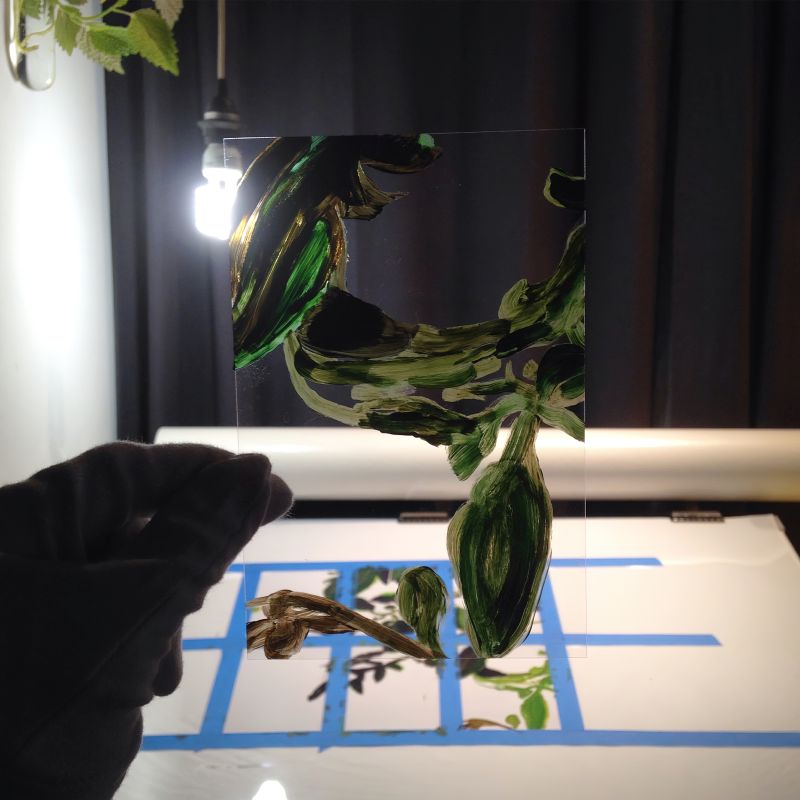
An arched shelf bolsters 6000 small sheets of thin, transparent plastic. Hundreds have already been painted, revealing that they exist as an assemblage of tiles that, when properly arranged, mimic their parent image. Fischer will paint the remaining sheets on demand as they are requested and will continue this practice alongside his other projects.

Artwork as a commodity is not valuable per se — its value is the result of an ongoing and never ending social negotiation. That being said, the work of art, and painting specifically, is an object that bears a concrete, almost measurable evidence of labour on its surface.² Paintings are worked over and leave a trace of the individual mark maker. Each edition in 1, 7, and 6000 shows on its surface the inevitable difference made during translation between parent image and end product. Each image is the real thing.

— Alex Fischer, February 2015.

¹ Davis, Ben. 9.5 Theses on Art and Class — Commerce and Consciousness. Chicago: Haymarket Books, 2013.

² Graw, Isabelle. Thinking through Painting — Reflexivity and Agency beyond the Canvas. Sternberg Press, 2012. Page 56.

---

2014

Fresh Paint

Art Mur

PEINTURE FRAICHE ET NOUVELLE CONSTRUCTION / FRESH PAINT / NEW CONSTRUCTION10e edition / 10th editionDu 19 juillet au 30 aout 2014 / July 19 August 30, 2014Vernissage : Le samedi 19 juillet de 15h00 a…

PEINTURE FRAICHE ET NOUVELLE CONSTRUCTION / FRESH PAINT / NEW CONSTRUCTION
10e edition / 10th edition
Du 19 juillet au 30 aout 2014 / July 19 August 30, 2014
Vernissage : Le samedi 19 juillet de 15h00 a 17h00 / Opening reception: July 19th from 3-5pm
Quarante-quatre artistes de douze universites a travers le Canada / Forty-four artists from twelve Canadian universities

Texte de Anais Castro / Text by Michael Patten

2013

Translation

O'Born Contemporary

Author: Rachel Anne Farquharson A translation can be many things: it can be a conversion or transformation from one physical form to another, it can be a progression in biological stage, and it can ev…

Author: Rachel Anne Farquharson

A translation can be many things: it can be a conversion or transformation from one physical form to another, it can be a progression in biological stage, and it can even be, in the most geometric of terms, the movement of a shape along an axis. Within art's pedagogical premise, the most apt definition for translation might be the rendering of something into one's own language, semiotically or aesthetically. Viewed through this lens, geographies that are foreign, ideologies that are suspect, and modes of technology to which we find ourselves unwittingly beholden need a level plane upon which to exist in globalized society. The arrow of understanding, as the exhibition title permits, rarely points in one direction, however. It is also worth considering how translations can abet the fetishization of objects, enabling simple acts such as keeping a daily journal or memorializing a pet to suddenly become estranged and foreign.

This exhibition provides recourse into the translation of the foreign into the accessible and the banal into the fetishized, proving the process to be a current that tugs in both directions. Each artist confronts their subject, at once making it pliable to our understanding and forcing it into the realm of the monumental through inherently indexical material.

Alex Fischer reappropriates digital imagery culled from today's archival abyss, exacting the terror of the sublime through an exposition of our dissolved communion with nature.

John Monteith transforms composite digital photography into a continuous film loop, a transubstantiation that proposes the foreign social and ideological landscape of North Korea as an unknowable environment to the Western mind. Digital photography reprinted as film is as much a facsimile as Petrina Ng's heirloom tapestries, where government-issued documents form the cartoon for recognizably domestic cross-stitches. Heirloom Facsimile, the artist's tri-part work, explores not only the physical journey artefacts take as they are passed between relatives but also the way in which propagandistic language and concepts translate between Eastern and Western schools of thought.

Callum Schuster creates abstracted daily journal entries by engaging with artefacts of the day — metal shorn from a soy silo or indigo material from a current installation project. The artist grinds these mundane objects down to particulate matter and suspends them in varnish or medium, simultaneously redefining paint as a medium and alluding to human's inclination to entrap mosquitoes in amber. His preservation of each day becomes a ritualistic and alchemical act as solid matter is translated into a medium that bears enhanced meaning.

In conversation, the artists in this exhibition aim to translate aspects of life, either by material or digital processes. In doing so, their works turn relatively mediocre materials into monumental versions of themselves and it becomes apparent that this translation is not uni-directional. The bizarre, propagandistic material that forms the basis of Ng's family heirloom and the society pictured by Monteith are delivered through accessible forms such as the domestic cross-stitch or the recognizable film reel. Conversely, Fischer's dismantling of the internet archive, Ng's dog fur diamonds and Schuster's faux pigment demonstrate that the current of transformation can be reversed, rendering an object strange through its monumentality as well. Transformed in these ways, the landscapes of social, psychic, cultural, physical and political content breach the boundaries of ordinary experience, inciting their audience to new personal and collective understanding.

These artworks are translated semiotically into recognizable — arguably understandable — forms. Absorptive physical platforms such as cross-stitch tapestries, diamonds, analog film, and paint deliver a programme which translates the mundane into the memorialized. And yet, none of the works exhibited here are as commonplace as they pretend to be. Seemingly banal environments and an archive of internet images with which we are lambasted every day have here been monumentalized, an attempt at archiving certain facts about life today.

---

2012

Simulators

Angell Gallery

Alex Fischer works to represent the time in which he lives. These images come from what has become the predominant first-world interface: the personal computer and internet capable device is now the p…

Alex Fischer works to represent the time in which he lives.

These images come from what has become the predominant first-world interface: the personal computer and internet capable device is now the primary filter by which broad swaths of people interact and come to know themselves. These technologies have the ability to snake our attentions, beliefs and desires, influencing cognition and our experience of the world.

In order to represent these paradigm shifts, Alex Fischer reifies the low-culture of individualistic habits and persuasions to be in dialogue with the ripe philosophy of high art. His chosen medium of digital collage perfectly compliments his artistic process, by which he paints together images from a collection of digital sources. Each piece concedes to multiple interpretations due to Fischer's choice to obscure the visual space of the image into near abstraction. The narratives encompass characters, scenes, and symbols with all of their ambiguity, insight, and metaphysical baggage on display. The content originates from their adaptations to and the impact of this current age.

---

Creative Process: Alex Fischer

Toronto Standard

Creative Process: Alex Fischer Toronto's Alex Fischer wants screen culture and the art world to integrate -- but why can't the art world get away from painting? When I first approached Toronto-based a…

Jessica Carroll. “Creative Process: Alex Fischer.” Toronto Standard, 2012.

Creative Process: Alex Fischer

Toronto's Alex Fischer wants screen culture and the art world to integrate -- but why can't the art world get away from painting?

When I first approached Toronto-based artist Alex Fischer and asked him if I could see his studio, we were at the opening for his solo show Beyond The Fall, now at Ossington's O'Born Contemporary. He looked at me, puzzled. "My studio is my home. My studio is my iMac." It's true. His pristine Artscape studio/apartment is small, and perfectly clean. "I'm kind of OCD," he said, laughing. But it takes a disciplined man to work the way Alex does: entirely in digital, laboriously laying textures.

The world of digital artmaking has a tumultuous reputation. As a newly minted, but still emerging form, it's confusing for art's traditionalist minds. Armed with Photoshop rather than a pencil, digital players are making their assault, creating work that is no less serious than that of their painting and sculpture peers, but which doesn't often get the recognition it deserves. Fischer is a good poster boy for the movement, a charming, optimistic and meandering young man, with a sharp intellect and intense passion. "I went to grad school for a semester, but I didn't like it. I dropped out. I tried to emphasize that my work existed on the internet as much as in the gallery. But [my panel] always insisted that my work only existed as print." This ambiguity and evasion of an easy label is attractive to Fischer who even denies calling himself anything other than simply "artist," despite his digital leanings. "I have a problem with people applying labels to things," he says.

His multi-sized works are meticulous digital studies, comprised entirely of found images, which he then processes using Photoshop and Corel Paint to create entirely new compositions: "I spend a lot of my time browsing. Basically, I live on the internet. I collect images. I save images. I have 10,000-20,000 images now that I keep in a digital library and I try to keep organized."

The beauty of digital is that it allows for a diverse visual experience, overtly juxtaposing multiple inspirations and forms. Because it's new, it's not formulaic; there is no doctrine or "right way." Some of Fischer's pieces are comprised of hundreds of images, while others feature under 10. In his show, there are representational pieces beside works of almost-complete abstract. He prefers it that way. "The beauty of working in digital is that I can split a piece in half, or I can save a piece and work on it 6 months down the line – I don't have to worry about paint drying. I can work on a piece in several different mind frames."

His exhibition showcases the far-reaching forms of his work: there are wall-sized landscape prints, both enticing and otherworldly, grotesque and overwhelming. His portraits are sometimes sad, but easily relatable. All interpretations are up to the viewer. "There are specific narratives or themes that I can talk about in my work," he says. "But people can interpret them however they want.

"For this show, I wanted to touch on all of the things that art history says I'm allowed to touch on as an artist. I can paint whatever I want. I don't pre-determine what a piece is going to look like before I do it. For example, I may incorporate a person, even when I hadn't planned to incorporate a person. The narratives and scenes that come out are unpreventable. When I'm working on a piece and it starts to resemble say, particle physics, I'll do some research on that, and it'll inform the work."

Ultimately, his work is a reflection of the changing technological world, and its influence the ways we do things. "I'm trying to make art that has a timeless quality. My work really reflects on the fact that I learned more when I dropped out of school. It's about being able to self-motivate and look up anything that you want. We have access to so much information. And that's new – that's never happened before [in society]."

His portfolio site is just as meticulously organized as his show. And that's an important facet of his: the internet. He believes its a space that will become increasingly important for the future.

And the future looks bright for Fischer.

"The future? If technology wasn't so expensive, I would do a lot more. If I could just work on a huge, canvas-sized screen, I would. I would love to work on a giant screen."

Alex Fischer's Beyond The Fall is showing at O'Born Contemporary (131 Ossington Ave) until March 10.

Beyond The Fall

O'Born Contemporary

Artists must take responsibility for representing the time in which they live. The images of Beyond The Fall come from what has become the predominant first-world interface: The personal computer and…

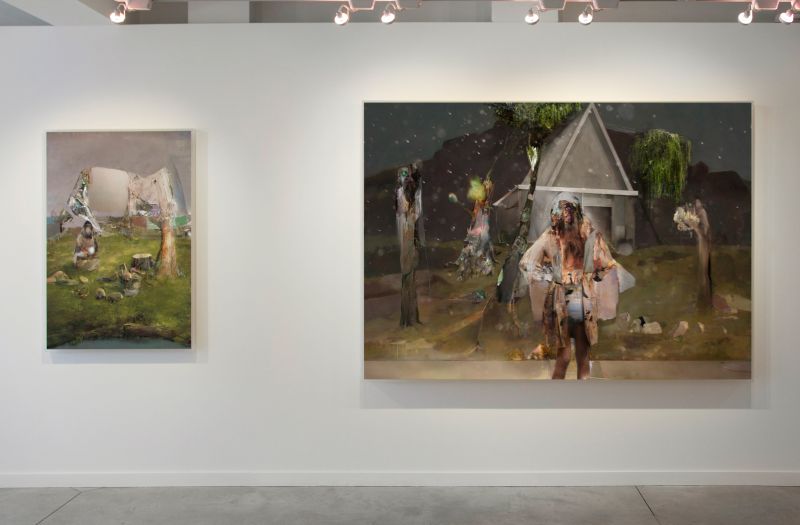
Artists must take responsibility for representing the time in which they live. The images of Beyond The Fall come from what has become the predominant first-world interface: The personal computer and internet capable device is now the primary filter by which broad swaths of people interact and know themselves. These technologies have the ability to snake our attentions, beliefs and desires, influencing cognition and our experience of the world.

In order to represent these paradigm shifts, Alex Fischer reifies the low-culture of individualistic habits and persuasions to be in dialogue with the ripe philosophy of high art. His chosen medium of digital collage perfectly compliments his artistic process, by which he paints together images from a collection of digital sources. Each piece concedes to multiple interpretations due to Fischer’s choice to obscure the visual space of the image into near abstraction. The narratives encompass characters, scenes, and symbols with all of their ambiguity, insight, and metaphysical baggage on display. The content originates from their adaptations to and the impact of this current age. — A. Fischer 2012

The exhibition took place February 4 – March 10, 2012.

Building on the History of Painting through Digital Layering

The Painting Imperative (International Contemporary Painting Magazine)

International Contemporary Painting Magazine Alex Fischer - Building on the History of Painting through Digital Layering As I approached O'Born Contemporary's (based in Toronto, Canada) space at this…

Erin Treacy. “Building on the History of Painting through Digital Layering.” The Painting Imperative (International Contemporary Painting Magazine), 2012.

International Contemporary Painting Magazine

Alex Fischer - Building on the History of Painting through Digital Layering

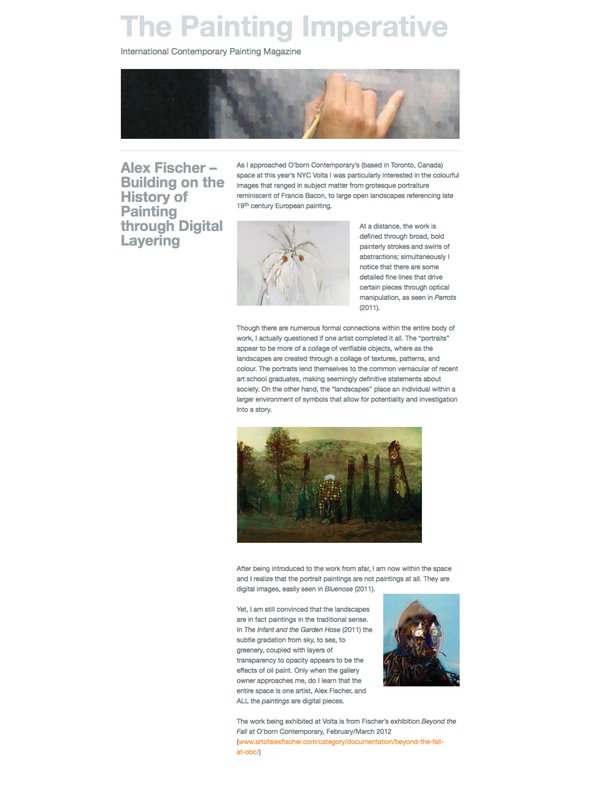
As I approached O'Born Contemporary's (based in Toronto, Canada) space at this year's NYC VOLTA, I was particularly interested in the colourful images that ranged in subject matter from grotesque portraiture reminiscent of Francis Bacon, to large open landscapes referencing late 19th century European painting.

At a distance, the work is defined through broad, bold painterly strokes and swirls of abstractions; simultaneously I notice that there are some detailed fine lines that drive certain pieces through optical manipulation, as seen in Parrots (2011).

Though there are numerous formal connections within the entire body of work, I actually questioned if one artist completed it all. The "portraits" appear to be more of a collage of verifiable objects, where as the landscapes are created through a collage of textures, patterns, and colour. The portraits lend themselves to the common vernacular of recent art school graduates, making seemingly definitive statements about society. On the other hand, the "landscapes" place an individual within a larger environment of symbols that allow for potentiality and investigation into a story.

After being introduced to the work from afar, I am now within the space and I realize that the portrait paintings are not paintings at all. They are digital images, easily seen in Bluenose (2011).

Yet, I am still convinced that the landscapes are in fact paintings in the traditional sense. In The Infant and the Garden Hose (2011) the subtle gradation from sky, to sea, to greenery, coupled with layers of transparency to opacity appears to be the effects of oil paint. Only when the gallery owner approaches me, do I learn that the entire space is one artist, Alex Fischer, and ALL the paintings are digital pieces.

The work being exhibited at VOLTA is from Fischer's exhibition Beyond the Fall at O'Born Contemporary, February/March 2012 (www.artofalexfischer.com/category/documentation/beyond-the-fall-at-obc/)

"The images of Beyond the Fall come from what has become the predominant first-world interface: The personal computer and internet capable device is now the primary filter by which broad swaths of people interact and know themselves. These technologies have the ability to shape our attentions, beliefs and desires, influencing cognition and our experience of the world. In order to represent these paradigm shifts, Alex Fischer reifies the low-culture of individualistic habits and persuasions to be in dialogue with the ripe philosophy of high art. His chosen medium of digital collage compliments his artistic process, by which he paints together images from a collection of digital sources. Each piece concedes to multiple interpretations due to Fischer's choice to obscure the visual space of the image into near abstraction. The narratives encompass characters, scenes, and symbols with all of their ambiguity, insight, and metaphysical baggage on display. The content originates from their adaptations to and the impact of this current age." (www.oborncontemporary.com/catalogue/Alex%20Fischer.html)

After digesting all the visual information from O'Born Contemporary's space, I was impressed with the artist ability to surprise me; more importantly he did not look to shock, there was no sensationalism, no quick tricks. Fischer utilizes technologies to merge history and multi-media. By doing so, he is able to subtly provoke a variety of emotions.

Most successful are the larger landscapes that build upon the history of painting, and allow for drama to occur in the composition that is not mandated but rather provoked. In these pieces Fischer collages together gathered and created visual information. These pieces have layered meanings that leave me questioning the solo-endeavor of the individual within a community that is dense with information. I see the journey we all take, both literally and metaphorically in the pieces: not determined, still unfolding. Fischer allows for us to contemplate our own path while also allowing us to think about how technology does not always need to be exercised and interpreted in the same manner each time. Not everything is as it seems, and when we address this human condition from a diplomatic place we can be less jaded, more forgiving, and ideally able to represent the current time period without imposing opinion. I am all for creating the conversation, facilitating the direction of the story, while managing not to state the conclusion.

About the Author

Alex Fischer lives in Toronto, Canada. A sociologist of internet culture, Fischer mediates the visual and theoretical philosophies, which can be accessed through contemporary technology. This extraction and the resulting dissemination are essential to his approach to art-making, which is at once reactionary and projective. His images are composed by digitally assembling visual and conceptual sources in order to explore the syncretic effect of the digital-age.

Erin Treacy lives and works in New York City. She is a Fulbright Fellow, Ireland: 2009-10, holds her BFA from Pratt Institute and her MFA from University of Massachusetts, Dartmouth, and is an exhibiting artist, curator and educator.

All images courtesy of O'Born Contemporary (www.oborncontemporary.com)

2011

Alex Fischer: Smarter Today

ArtBarrage / Scene Content

Alex Fischer: Smarter Today Painting as a practice, before all other media, has undergone copious amounts of inspection from without, and introspection from within. This may be because, as critic and…

Rachel A. Farquharson. “Alex Fischer: Smarter Today.” ArtBarrage / Scene Content, 2011.

Alex Fischer: Smarter Today

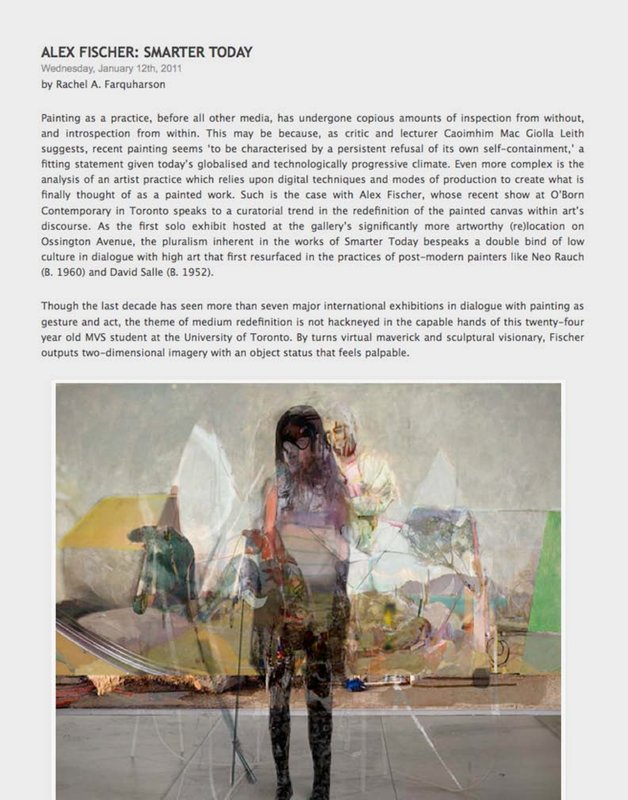
Painting as a practice, before all other media, has undergone copious amounts of inspection from without, and introspection from within. This may be because, as critic and lecturer Caoimhín Mac Giolla Léith suggests, recent painting seems "to be characterised by a persistent refusal of its own self-containment," a fitting statement given today's globalised and technologically progressive climate. Even more complex is the analysis of an artist practice which relies upon digital techniques and modes of production to create what is finally thought of as a painted work. Such is the case with Alex Fischer, whose recent show at O'Born Contemporary in Toronto speaks to a curatorial trend in the redefinition of the painted canvas within art's discourse. As the first solo exhibit hosted at the gallery's significantly more artworthy (re)location on Ossington Avenue, the pluralism inherent in the works of Smarter Today bespeaks a double bind of low culture in dialogue with high art that first resurfaced in the practices of post-modern painters like Neo Rauch (b. 1960) and David Salle (b. 1952).

Though the last decade has seen more than seven major international exhibitions in dialogue with painting as gesture and act, the theme of medium redefinition is not hackneyed in the capable hands of this twenty-four year old MVS student at the University of Toronto. By turns virtual maverick and sculptural visionary, Fischer outputs two-dimensional imagery with an object status that feels palpable. Figure Head, 2010, which bears down on the viewer at 140 x 145 cm, invites entry and interaction, the centrally located, dog-faced girl just grotesque and fragmented enough to evoke Francis Bacon. Bacon, who intended "to distort [the figure] far beyond the appearance, but in the distortion to bring it back to a recording of the appearance" finds a voice once more in the flurry of layers that both dis- and re-assemble Fischer's complex compositions. Figure Head draws upon the veritable archive of images that the internet has become, capturing a glimpse of today's epistemological development in the process. The artist's espousal of digital collage and illustration "allows [him] to visually interpolate resources" in a way that speaks to humanity's greater consciousness and, furthermore, to its very future. Quite simply, as a race we are careening towards an intersubjectivity that makes each of us a flesh-bound collage of experience, landscapes, and concepts.

This is perhaps the most salient point that Fischer advances with a piece like Untitled Greens, 2010, a moderately sized work that takes as its conceptual and physical ground a photograph of a forest by Traci Matlock and Ashley MacLean. The image has been altered such that its tone and formal nature combine "the Real" according to Hal Foster with an ephemeral quality that shrouds most people's childhood memories. The idea that forests are vehicles for strange and mythological happenings is one transmitted from generation to generation in many cultures. Fischer uses the accumulation of memory, belief, and narrative to make a statement about humankind. The near dissolution of forest trees contrasted against the appearance of ghoulish faces grafted to their trunks visualizes the interplay between the real and the mystical that the artist is trying to access. Although Fischer has spoken of his own upbringing in the Ontario countryside as a cognitive influence, the images he employs already have a registered meaning that he maintains is important to acknowledge. In appropriating the work of other artists, Fischer always attempts to gain a good grasp of both the context in which the image was created and the nature of the artist's practice itself. Thus, once the artist found Matlock and MacLean on Flickr, he followed their practice and artistic output for several years prior to starting a dialogue with them and their work.

Finally, it is the rigid duality of mind and body as a primary mode of existing in the world that Fischer rejects, using the phenomenology of perception suggested by philosopher Maurice Merleau-Ponty to advance his own novel conclusions. Consider a populace whose foundation is the collective embodiment of each other's personalities and souls. Just as figures are iterated in Fischer's art through the superimposition of images onto each other, each person is philosophically a summation of his or her cohabitants. The large scale work, Three Fates, 2010, is a reflection of the syncretism that the artist holds responsible for the creation of his body of illustrated subjects and characters. The largely barren urban landscape here depicted is not as bleak as conventional subjectivity would have us believe—to Fischer, the diluted palette is more peaceful than forbidding. In this future world, subjectivity is no longer useful therefore evolutionary theory would demand that it atrophies like a muscle in disuse, allowing us to live in a relatively neutral, colourless culture. Though the landscape is only host to two people, the artist conceives each person as a collective of thousands. "Actually, the composition is very crowded," laughed Fischer when questioned about the piece. What is obvious to him seems ironic given the few objects to behold in many of the works in Smarter Today.

Three Fates is evidence of a recent challenge Fischer has created for himself: to be in compositional dialogue with the traditional diptych/triptych. Bisecting the large proscenium arch arrangement in this piece is a totem pole, imbued with enough life force to be considered the third fate in the image's narrative. Other possibilities for this third figure are the viewer or, interestingly, the art work positioned directly across from Three Fates in the gallery. A concerted curatorial choice by the artist and O'Born Contemporary director Natalie MacNamara, the opposing image is the tripartite Cookes Cape, 2010. Thus, the two large works were made to face each other to ignite a conversation about their similar obedience of an art historical compositional precedent. The challenge, or as Fischer describes it, "risk" in working with the diptych or triptych format is allowing an image to exist when different realities are positioned to reflect each other—the adjacent two/three sides expose the fact that their subjectivities do not necessarily agree. There is a risk in getting lost in the work, as if the worlds are facing mirrors wherein your reflection becomes so dislocated that it can actually disappear. Theoretically, the totem in Three Fates acts as the joint in a mirror between the two subject bodies, putting both or either in danger of extinction. Frankly, in an imagined world where subjectivity has been eliminated and only collective identities exist, the transformation of material bodies to virtual whispers seems completely à propos.

Footnotes

1. Caoimhín Mac Giolla Léith, "Surveying Contemporary Painting," Circa, No. 109 (2004): 58
2. David Sylvester, Interviews with Francis Bacon (London: Thames & Hudson, 1993), 40
3. Alex Fischer, "First Year Practice Draft," 15 November, 2010

2010

Smarter Today

O'Born Contemporary

Smarter Today is neither an optimist or pessimist. It offers a human view of futurist landscapes, a view exploring the ideologies and projections of contemporary society. The human landscape is fallib…

Smarter Today is neither an optimist or pessimist. It offers a human view of futurist landscapes, a view exploring the ideologies and projections of contemporary society. The human landscape is fallible and susceptible to weaknesses.

Alex Fischer creates human landscapes and portraits with respect to a fundamental question of art: "How can we represent the present?" His response is to investigate the ideologies and projections of contemporary society.

The advancement of machine generations has vastly outpaced the human lifespan. People have no idea what the world will be like in 20, 100, or 1000 years. Keeping in mind that our ideas of the future are the quickest ideas to fade, Fischer conglomerates a variety of sources to provide an illustration of human potential, while maintaining consideration of human nature, and individual circumstance.

131

O'Born Contemporary

131 brings together this diverse group of artists to inaugurate our new space, to introduce our new curatorial team and foremost, to announce our broadened approach to medium-specific programming. O'B…

131 brings together this diverse group of artists to inaugurate our new space, to introduce our new curatorial team and foremost, to announce our broadened approach to medium-specific programming.

O'Born Contemporary was established as a gallery, exhibiting contemporary photographic and lens-based works by living artists. This shall be maintained in our new space with the addition of works of all mediums, conceptually or practically linked to photography or its history.

The artists that represent us are photographers, journalists, documentarians, painters, sculptors, builders and thinkers; they do not necessarily commit themselves to a single mode of expression but all contribute to the ongoing dialogue of photography's place in contemporary art practices.

[...]

Alex Fischer's work is fodder for discourse on digital image-making. His work is heavily layered, both theoretically and visually, challenging notions of appropriation and ownership. Through reference to work of practicing artists and subsequent abstraction thereof, Fischer creates a rich and elegant aestheticization of contemporary art history in social media. [...]

A special thanks to P. Elaine Sharpe for her critical contribution to the foundation of O'Born Contemporary.
None of this would be possible without you!

Exhibition Documentation Photography by Thomas Blanchard.

2009

Synthesis

Blackflash Magazine

PHOTOGRAPHY AND NEW MEDIA IN ART Jatt Ducklo’s stunning Touch Tour Pictures | Antonia Hirsch & Lynne Marsh film the absent masses of the sportsplem: SYNTHESIS ~ Alex Fischer's digital explorations and…

“Synthesis.” Blackflash Magazine, 2009.

PHOTOGRAPHY AND
NEW MEDIA IN ART

Jatt Ducklo’s stunning
Touch Tour Pictures

|

Antonia Hirsch &
Lynne Marsh
film the absent

masses of the sportsplem:

SYNTHESIS

~ Alex Fischer's digital explorations and
expanded painting

Alex Fischer works with other people's images. Fischer uses Adobe
Photoshop, Corel Painter and a Wacom tablet to turn donated images by
colleagues and classmates into a mashup of styles and mediums that is
purely his own. The title of each piece refers to the artist whose work
Fischer has sampled, Executed during the spring of 2009, Fischer's artist
project Synthesis is an immersion into the effect of digital information
and continues his experimental tendencies of post-abstract expression-
ism and expanded painting. His work explores the relationship between
contemporary art and the context of art production within a university
visual arts program.

Setting up specific dialogues between the trends of his contempo-
raries, Fischer treats the production of artwork as a type of syncretism:
the melding of various schools of thought by artists working off one an-
other. Fischer aestheticizes this collective emersion to provide insight on
the current directions of art in social media. The result is a delicate med-
ley of information and simulation.

Alex Fischer was born in Walkerton, Ontario and is currently in the
process of receiving his BFA Honours from York University. More of Fis-
cher’s work can be seen at artofalexfischer.com.

BlackFlash.ca

Hot!

O'Born Contemporary

As we move into our second year at O'Born Contemporary we look forward to continuing to showcase the best of emergent and mid-career artists working across the aesthetic, conceptual and technical terr…

As we move into our second year at O'Born Contemporary we look forward to continuing to showcase the best of emergent and mid-career
artists working across the aesthetic, conceptual and technical terrains of contemporary photography. Additionally we will be focusing our attention on our educational
mandate in 2009/10, introducing information sessions, discussions and workshops to the Gallery's programming. This exhibition took place February 4 – March 13, 2009.

We are starting our second year with O'Born Contemporary's annual summer exhibition, HOT!, opening June 13th 2009. You are invited to
join us in celebrating a successful and dynamic first year as we introduce four gifted young artists to what has proven to be an exceptional audience. Kyohei Abe,
Alex Fischer, Davida Kidd and Alina Skyson are dedicated explorers of visual paradigms in the photograph itself; the depth of their investigations are made richer
through layers of meaning and investigations of alternate processes. They make beautiful hybrid work that will delight the intelligent viewer interested in current
HOT! topics in the art world such as appropriation, spatial constructs, distortions of the real, and the authority of the eternal object.

Kyohei Abe came to our attention through portfolio reviews in Portland, Oregon. He is a Japanese-born artist with a background in
architecture and photography, who currently lives and teaches in Detroit. Abe's aesthetic is defined through his use of simple objects placed in unadorned visual
fields containing barely perceptible shifted perspectives. His photographs are highly evocative of drawing, conscious and poetic choices soften both the literal and
physical hard edges of being a citizen at the edges of an idealized American culture.

Alex Fischer is an artist with a considerable online reputation for being a trailblazer in current digital image-making discourse.
Trained as both painter and photographer, he is an artist who embraces hybrid practices, moving easily from painting studio to digital darkroom. The resulting work
is an astonishingly beautiful and complex amalgam of layered visual and theoretical data, borrowing heavily from contemporary art history while remaining unique in
character. One must spend time with the abstraction and chaos in his work in order to discover the richness of details lying beneath the painterly surface.

Alina Skyson addresses the challenges of transitions in analog and digital photographic processes and wrestles them into submission.
Her actions for the images we are showing in HOT! began with Skyson taking photographs of a dollhouse brought to Canada from her childhood home near Chernobyl, in
Ukraine. She has painted the dollhouse white in order to erase the marks of childhood and then photographed it with expired expired instant Polaroid film. The exposed
film, both negative and positive, is placed onto expired digital photo paper. The generic brand paper and expired photo-chemistry bond in an alchemical marriage that
gives unexpected colour to the absent space of the disrupted image. This is contemporary image making at the conceptual margins of the image itself, and as with the
future of photography the monoprints may or may not be stable. The processes of Skyson's work are provocative statements about the future of photography as well as
delightful reminders of the transience of now-vanished latent images that were made during the birth of photography, almost 200 years ago.

Davida Kidd's single large-scale image selected for this group exhibition is a remarkable companion to the other works. Kidd is a
mid-career artist currently living and working on the west coast of Canada. While her image appears to be a highly manipulated product of a digital darkroom, it
is in fact a constructed image created by Kidd in her studio using a doll, a highly reflective surface, sculptural cones and a fabric backdrop. The space of the
composition is the space of dreams, the figure with its back turned neutralizes our ability to see what she is seeing, instead we observe her as she navigates a
topsy-turvy shimmering threshold of possibilities. I like to think of her as being the frontrunner for the adventures that are ahead as we move forward into the
unknown. Welcome to our second year! Let's enjoy the long and hopefully HOT! season together!

- P Elaine Sharpe – January 2008

Resolution

Median Contemporary

Artist Statement: Alex Fischer Current as of: 12 May 2009 Alex Fischer’s work is developed around the relationship between contemporary art and the context of production within a university visual art…

Artist Statement: Alex Fischer
Current as of: 12 May 2009
Alex Fischer’s work is developed around the relationship between contemporary art and the
context of production within a university visual arts program. An immersion into the affect of
digital information, Fischer’s work continues the experimental tendencies of post-abstract
expressionism and expanded painting. By specifically referencing practicing artists in various
stages of their careers his work exploits art historical context and the tautological influence of art
institutions.
Setting up specific dialogues between the trends of his contemporaries Fischer treats the
production of artwork as a type of syncretism. The melding of various schools of thought by
artists working off one another, there is a strong sense of camaraderie in developing the artistic
potential of emerging technologies. Specifically drawing on the work of colleagues and
professional influences communicates the inherent relationships and modes of fine arts
education. Fischer aestheticizes this collective immersion to provide insight on the current
directions of art in social media. The result is a delicate medley of information and simulation.
The iconographical traces suggest a predetermination for complexity, yet permits a point of
reference for the bizarre and recognizable symbols. The dialogue is extensive and provides
reflection for both the social and art historical qualities of the piece.
Alex Fischer lives and works in Toronto, Ontario, and is currently in the process of receiving his
BFA Honours from York University. His technical background and interest in new media has
allowed the influence of technology to proliferate in his work. He is the 2008/2009 recipient of
the Willowdale Group of Artists Painting Award and was featured in Art Mur’s fourth edition of
Peinture fraîche / Fresh Paint.

---

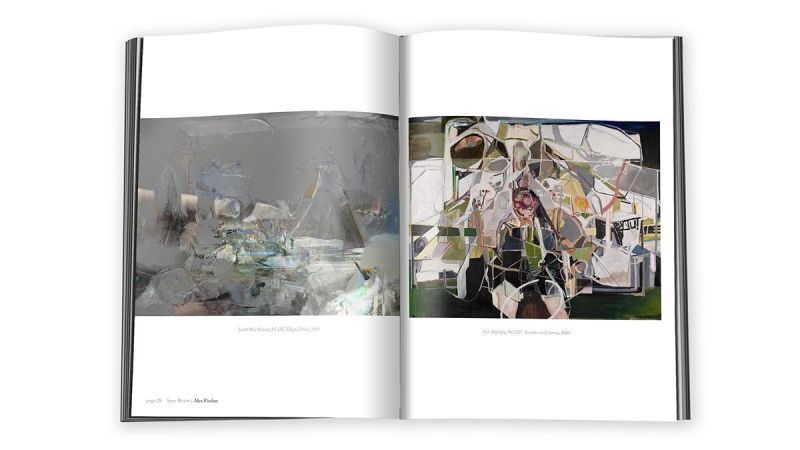
Sync Resist

Sync Resist

Sync Resist P. Elaine Sharpe This publication begins by considering notions of being in sync, and in particular the unrepeatable synchronicity of symbiotic relationships that occur at a specific time…

“Sync Resist.” Sync Resist, 2009.

Sync Resist
P. Elaine Sharpe

This publication begins by considering notions of being in sync, and in particular the unrepeatable synchronicity of symbiotic relationships that occur at a specific time and place within any given community. The consensus would be that many streams come together within the proscribed boundaries of an undergraduate visual arts program: the visual, the textual, and the conceptual. While the emphasis is on ways of seeing in a school which is dedicated to mentoring and fostering a passion for that which is meant to be seen, it is no longer a pursuit that can be predicated in visual knowledge, in and of itself. There must be an eventual resistance against synchronicity itself in order to create a paradigm shift into new ways of thinking and perceiving.

Separate and autonomous structures and systems of both teaching and learning morphed into a buzz of actions and reactions that set the groundwork for points of emergence and the production of works in this book. The interactivity of the hive itself ultimately leads to an actualization of a new praxis and a defining creative impulse. The aggregate of ideas, actions, and interactions delineate but do not define the results or the eventual outcomes of time spent within this constantly shifting and synergistic boomtown.

The works in this publication are a small sampling of what and how young emerging artists know what they have learned to this moment, and represents what has become possible through their individual accumulations of many kinds of knowing. The rapid incursion of digital and social media into everyday life begs questions that must be asked of contemporary arts education in the 21st century, questions of what it is to know (knowing how, knowing what, knowing who). The institutionalized university environment in particular lends itself to a solipsistic discussion of what and how we teach as compared to the discussion surrounding what and how artists know what they know.

These parallel unique streams of what and how, as opposed to know-what and know-how, have a momentum and a logic of their own, and at the end of a student's tenure within the institution they must take both the world of knowledge, and that of knowing, and merge them together in order to begin their careers as artists within communities of their peers. The works contained within this volume are specific expression of those two worlds and of a specific time and relationships between faculty and students and the physical built environment of York University. It is a time that cannot be repeated; those students who have received material and intellectual guidance will move on, faculties will change, new infrastructures will become apparent.

What comes from this chaos, this inexorable chase to the end, determined through the artificial construct of a four-year degree? The presumption that learning has a beginning, middle, and end might more appropriately be considered as a period of time spent in search of a continuum which is not ending, but rather is quietly beginning. This publication presents the beginnings of a selected group of students who represent this syntagm, and the step outward into that brave world of more, of further, sync resists.

P. Elaine Sharpe
October 2009